
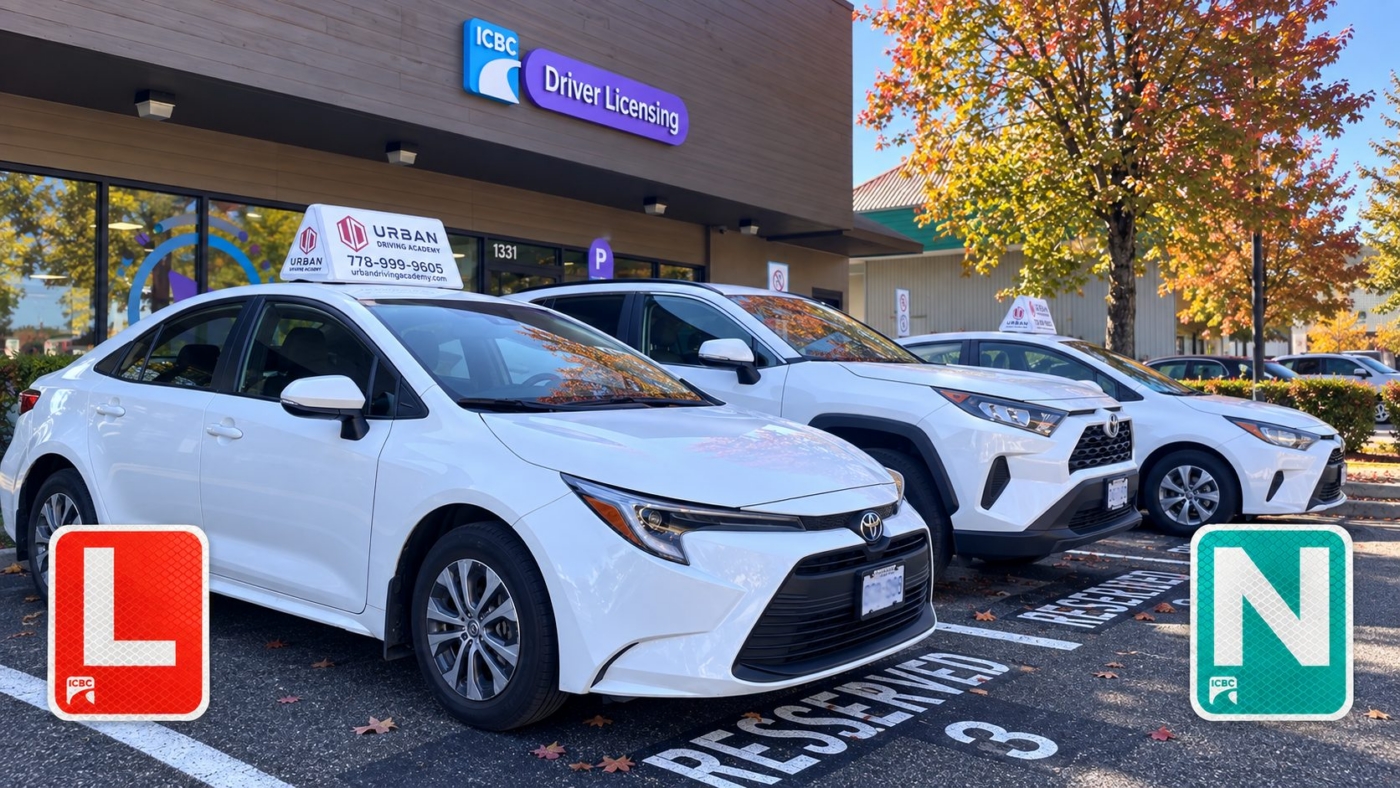
Your road test is not the time to demonstrate a different way of driving. The best preparation is to practise in a variety of situations until you can make calm, attentive decisions. Do not be overly cautious: unnecessary stops and hesitation can create risks. At the same time, do not take chances to appear confident. Move when it is safe, and wait when it is not.
At Urban Driving Academy, we do not believe there is one way to drive for the test and another way to drive in everyday life. The habits you build during lessons should continue to protect you, your family, and other road users long after you receive your licence.
Find out whether you are ready
If you are unsure whether you are ready for your road test, ask an experienced instructor at any reputable driving school to assess your driving. They can identify skills that need more work, such as observation, right-of-way decisions, speed control, turns, or parking. If you have time to practise, focus on those areas before your test.
An assessment is not about finding faults for the sake of criticism. It helps you understand what you already do well and where more practice would make a difference.
What happens when you arrive at ICBC?
Check the arrival time in your booking confirmation and give yourself plenty of time to get to the ICBC office. Bring one primary and one secondary piece of identification accepted by ICBC, payment for the test, and a safe, insured vehicle. Have the vehicle’s licence plate number ready for check-in.
The road test begins with a vehicle safety check. Be ready to demonstrate the hand signals for turning left, turning right, and stopping. Know how to operate the left and right turn signals, low beams and high beams, brake lights, front and rear defrosters, windshield wipers, horn, hazard lights, parking brake, and service brake. Practise using these controls in the vehicle you will bring to the test.
The examiner will explain the test and ask whether you have any questions. You are an ICBC customer. If something is unclear, feel comfortable asking politely. Before the drive is the best time to ask questions about the test. During the drive, you can ask the examiner to repeat or clarify a direction. Turn off your GPS or navigation system, and do not use a phone or recording device during the test.
Check your vehicle before test day
The day before your test, walk around the vehicle. Check the tires, brake lights, turn signals, headlights, windows, seatbelts, and horn. Make sure the insurance is valid and the vehicle has enough fuel or charge. Keep the interior clean and free of items that could interfere with driving or affect the examiner’s safety.
A cracked or illegally tinted window, unsafe tires, a faulty brake light, or a warning light related to safety—such as an airbag warning—may prevent the vehicle from being accepted for the test. Do not assume that a check-engine light or minor cosmetic damage will automatically be accepted or rejected. If you are unsure about the vehicle, contact ICBC before test day. The final decision will be made when the vehicle is checked.
Do the right things for the right reasons
We do not teach shoulder checks simply so an examiner can see you turn your head. A shoulder check helps you see a person or vehicle in your blind spot. Before changing lanes, changing your road position, or pulling away from the curb, check the blind spot on the appropriate side at the right time. When turning right, check to your right for cyclists, pedestrians, and other road users.
A stop at a stop line is not a performance for the test, either. Where a stop is required, come to a complete stop behind the stop line. Then scan the intersection, yield where required, and proceed when it is safe. You do not need to count seconds in your head to make the stop look convincing.
More action does not always mean more safety. Stopping or slowing down without a reason can surprise other drivers. Repeated, poorly timed shoulder checks can take your eyes away from the road ahead when you need them there. What matters is making the necessary checks at the right time, with your attention on the risks around you.
If you make a small mistake, keep driving
The examiner assesses more than one moment. Observation, space margins, speed, steering, and communication with other road users all matter. A small mistake does not necessarily mean you have failed. For example, ICBC says that touching the curb during a parking manoeuvre is not, by itself, a fail. You still need to keep control of the vehicle and complete the manoeuvre safely. A traffic violation or dangerous action can affect the result.
If you do something less smoothly than you hoped, do not keep replaying it in your mind. Bring your attention back to the road and the next decision.
The examiner’s responsibility is to determine whether you can drive without putting yourself or others at risk. If you do not pass, use the feedback to guide your practice. The result may be disappointing, but addressing a weakness before you drive independently can benefit you and everyone who shares the road with you.
Our goal is bigger than passing one test. We want you to arrive safely every time you drive—and to enjoy the journey.
Add a Comment